Table of Contents
- The Physiology of Type 1 Diabetes and the Need for Continuous Data
- The Symbiotic Relationship Between an Insulin Pump and a CGM Sensor
- Technical Dominance: The 15-Day LinX Advantage
- Financial Strategy: Analyzing the Insulin Pump Price in Egypt
- Clinical Guidelines Comparison: ADA, NICE, and ISPAD
- Preventing Hypoglycemia Unawareness
- الأسئلة الشائعة (FAQ)
- References
1. The Physiology of Type 1 Diabetes and the Need for Continuous Data
Managing Type 1 diabetes demands clinical precision, not guesswork. Patients relying on an insulin pump egypt face a critical challenge: a pump is only as intelligent as the data feeding it. Without accurate, real-time glucose metrics, even the most advanced subcutaneous infusion system operates blindly. This creates an unacceptable clinical risk for severe hypoglycemia. The LinX CGM sensor solves this data deficit. It provides real-time interstitial fluid glucose measurements, seamlessly integrating with pump therapy to mimic a healthy biological pancreas.
Type 1 diabetes triggers an autoimmune destruction of pancreatic beta cells. This leaves the body entirely dependent on exogenous insulin. Traditional capillary blood glucose testing (fingersticks) offers static snapshots. A patient might test their blood sugar at 8:00 AM and see a reading of 110 mg/dL. By 9:30 AM, that same patient could be experiencing asymptomatic hypoglycemia at 55 mg/dL. The static test misses the severe drop entirely.
To achieve tight glycemic control and increase Time in Range (TIR), clinicians mandate continuous surveillance. A continuous glucose monitor egypt provides exactly that. It tracks interstitial fluid glucose every 60 seconds. This constant stream of data reveals the velocity and direction of glucose changes, allowing patients to intercept severe highs or dangerous lows before they physically manifest. Modern diabetology emphasizes that capturing these rapid fluctuations is the cornerstone of avoiding long-term vascular damage.
"The integration of continuous glucose monitoring with insulin pump therapy marks the transition from reactive treatment to proactive metabolic management, transforming unpredictable glucose swings into actionable data." - Dr. Mostafa Seefelnasr
Every 10% increase in TIR directly corresponds to an approximate 0.8% reduction in HbA1c. Relying on intermittent fingersticks makes achieving a TIR above 70% nearly impossible for volatile Type 1 profiles. Continuous monitoring bridges the gap between static measurement and dynamic metabolic realities.
2. The Symbiotic Relationship Between an Insulin Pump and a CGM Sensor
An insulin pump delivers rapid-acting insulin (like insulin lispro or aspart) continuously to cover basal metabolic needs. Users manually input carbohydrate grams to deliver bolus doses for meals. While the mechanical delivery of an insulin pump egypt is precise, manual bolus calculation introduces human error.
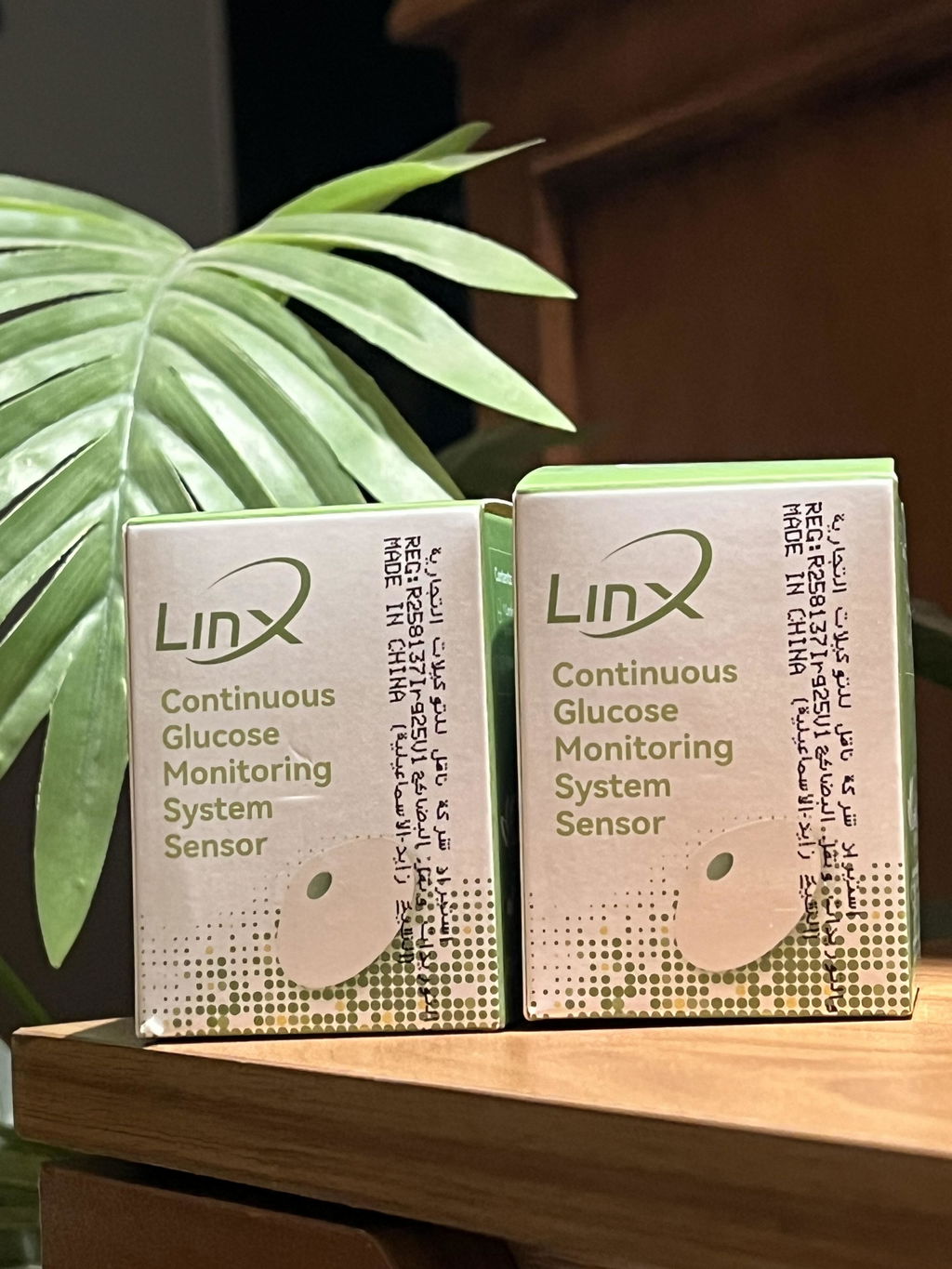
Pairing the pump with a LinX CGM sensor transforms isolated hardware into a cohesive, closed-loop architecture. The sensor communicates directly with compatible pump ecosystems via Bluetooth, acting as the brain for the mechanical insulin delivery system.
When the LinX sensor detects a rapid downward trend in interstitial glucose, it sends a preemptive alert. Advanced patch pumps, such as the Equil system, can utilize this continuous data stream to temporarily suspend basal insulin delivery. This predictive suspension prevents severe hypoglycemic events, especially nocturnal hypoglycemia, which remains a primary cause of mortality in Type 1 patients.
The pump executes the delivery. The sensor dictates the strategy. Operating a pump without a CGM sensor forces the user to drive a high-performance vehicle while blindfolded. Establishing this closed-loop ecosystem maximizes the therapeutic value of both devices, offering unparalleled freedom and safety.
3. Technical Dominance: The 15-Day LinX Advantage
The LinX sensor represents a significant leap in wearable medical technology. Most legacy sensors require replacement every 7 to 10 days. The LinX hardware operates continuously for 15 days. This extended lifespan reduces skin trauma from frequent adhesive removal and lowers the frequency of sensor warmup periods, ensuring uninterrupted monitoring for longer durations.
Clinical efficacy depends entirely on accuracy. The LinX device boasts a Mean Absolute Relative Difference (MARD) of 8.66% to 9.08%. In clinical diabetology, a MARD below 10% indicates exceptional precision. The device requires zero mandatory fingerstick calibrations. It comes factory-calibrated, eliminating the pain and hassle of routine capillary checks.
Data updates occur every minute. This 60-second refresh rate is superior to many competitors that update every five minutes. During rapid glycemic shifts—such as post-prandial spikes or exercise-induced drops—a one-minute refresh rate provides a crucial temporal advantage for early intervention.
4. Financial Strategy: Analyzing the Insulin Pump Price in Egypt
Healthcare economics directly impact patient compliance. Patients constantly weigh the insulin pump price in egypt against long-term clinical benefits.
Traditional management involves purchasing test strips, lancets, long-acting basal insulin pens, and rapid-acting bolus pens. Testing 6 to 8 times daily generates a massive recurring expense. Furthermore, poor control leads to emergency room visits for diabetic ketoacidosis (DKA) or severe hypoglycemia. These acute hospitalizations carry devastating financial costs.
Evaluating the glucose sensor price requires looking at long-term utility. A 15-day LinX sensor eliminates the daily burn rate of test strips. When paired with a reliable patch pump, the system stabilizes HbA1c, drastically reducing the lifetime risk of microvascular complications like retinopathy, neuropathy, and nephropathy. Treating these late-stage complications costs exponentially more than the upfront investment in modern diabetes hardware.
The initial insulin pump price in egypt might appear steep. However, analyzing the annualized cost of a pump and the recurring glucose sensor price proves it is a cost-effective strategy for preventing catastrophic medical emergencies.
5. Clinical Guidelines Comparison: ADA, NICE, and ISPAD
Global medical authorities uniformly endorse continuous monitoring for Type 1 diabetes. Leading organizations recognize that standardizing CGM implementation is vital for global health outcomes. However, slight variations exist in their specific recommendations and target metrics. The following table highlights the consensus and disagreements across major guidelines.
| Organization & Guideline Source | Recommendation on CGM Use | Specific TIR Target | Key Disagreement / Unique Stance | Direct Quote |
|---|---|---|---|---|
|
ADA (American) Standards of Care 2026 |
Recommended for all adults and youth with Type 1 diabetes. | >70% (70-180 mg/dL) | Heavily prioritizes Time Below Range (TBR) <4%. | "CGM should be offered to all people with type 1 diabetes to improve A1C and reduce hypoglycemia." |
|
NICE (British) NG17 Guidelines |
Recommends offering adults with Type 1 a choice of real-time CGM or intermittently scanned CGM. | >70% (70-180 mg/dL) | Emphasizes cost-effectiveness and shared decision-making over mandatory real-time CGM for all. | "Offer adults with type 1 diabetes a choice of real-time continuous glucose monitoring (rtCGM) or intermittently scanned continuous glucose monitoring." |
|
ISPAD (Global) Clinical Practice Consensus |
Strongly recommends real-time CGM for all pediatric Type 1 patients. | >70% (70-180 mg/dL) | Suggests highly individualized targets for infants and toddlers due to erratic eating patterns. | "Real-time CGM is the preferred method of glucose monitoring for youth with type 1 diabetes." |
All three organizations agree that any continuous glucose monitor egypt deployed must minimize time spent in hypoglycemia. The LinX sensor's predictive alarms align perfectly with these stringent international mandates.
6. Preventing Hypoglycemia Unawareness
Long-standing Type 1 diabetes often results in autonomic neuropathy. The body stops producing the epinephrine rush typically associated with low blood sugar. Patients stop feeling the shaking, sweating, or palpitations. This condition, known as hypoglycemia unawareness, is lethal. A patient can drop to 40 mg/dL and simply collapse without warning.
The LinX CGM sensor features six customizable predictive alerts. It bypasses the patient's damaged biological warning system and provides a mechanical, auditory warning. If glucose levels drop faster than 2 mg/dL per minute, the connected smartphone or smartwatch will physically vibrate and sound a high-decibel alarm. This forces the patient to consume fast-acting carbohydrates before cognitive impairment sets in.
(FAQ)
What is the average insulin pump price in egypt?
The insulin pump price in egypt varies based on the technology tier. Patch pumps like the Equil require a lower initial hardware investment compared to traditional tubed pumps, with costs shifting toward the monthly consumables (reservoirs and infusion sites).
How does the glucose sensor price impact monthly expenses?
The glucose sensor price for a LinX system is highly competitive because each sensor lasts 15 full days. This requires only two sensors per month, cutting the recurring cost significantly compared to 7-day or 10-day alternatives.
Can I use the LinX continuous glucose monitor egypt without an insulin pump?
Yes. The LinX CGM sensor functions perfectly as a standalone diagnostic tool. It pairs directly with your smartphone via Bluetooth to track glucose trends, even if you manage your Type 1 diabetes with multiple daily injections (MDI).
Does the LinX sensor require daily fingerstick calibration?
No. The LinX sensor comes factory-calibrated. It relies on advanced algorithmic processing to maintain an 8.66% MARD without requiring mandatory capillary blood testing.
Is the LinX sensor waterproof?
The LinX sensor carries an IP68 waterproof rating. You can swim, shower, and bathe while wearing the device continuously without disrupting your data transmission.
References
- Standards of Medical Care in Diabetes—2026 - American Diabetes Association (ADA), Diabetes Care, 49(Supplement_1).
- Type 1 diabetes in adults: diagnosis and management (NG17) - National Institute for Health and Care Excellence (NICE).
- ISPAD Clinical Practice Consensus Guidelines 2022: Continuous glucose monitoring - International Society for Pediatric and Adolescent Diabetes (ISPAD), Pediatric Diabetes.
- Clinical Targets for Continuous Glucose Monitoring Data Interpretation - Battelino, T., Danne, T., Bergenstal, R. M., et al. (2019), Diabetes Care, 42(8), 1593-1603.
Legal Disclaimer: The content provided in this article is for informational and educational purposes only and does not constitute medical or legal advice. Always consult with a qualified healthcare professional or endocrinologist regarding any changes to your diabetes management, insulin dosing, or the purchase of medical devices. Use of continuous glucose monitors and insulin pumps must be directed by a licensed physician.